Casque
Remix IDE has built-in support for Hardhat, an Ethereum development environment for compiling, deploying, testing, and debugging Solidity smart contracts. With Remix Desktop, you can connect to a local Hardhat project, giving you access to Hardhat compilation and the Hardhat Provider for deploying to a local node.
Enable Hardhat compilation
Conditions préalables
To use Hardhat compilation with Remix Desktop efficiently:
Hardhat should be installed locally on the system https://hardhat.org/docs/getting-started.
The folder should be a Hardhat project containing
hardhat.config.jsorhardhat.config.ts.
How to Use
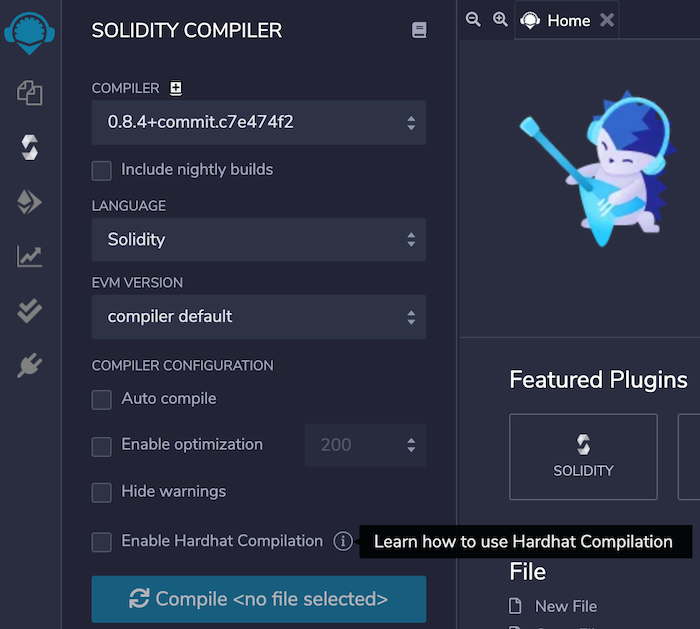
When you open a Hardhat project on Remix Desktop, there will be an extra checkbox in the Solidity Compiler plugin with the label Enable Hardhat Compilation.
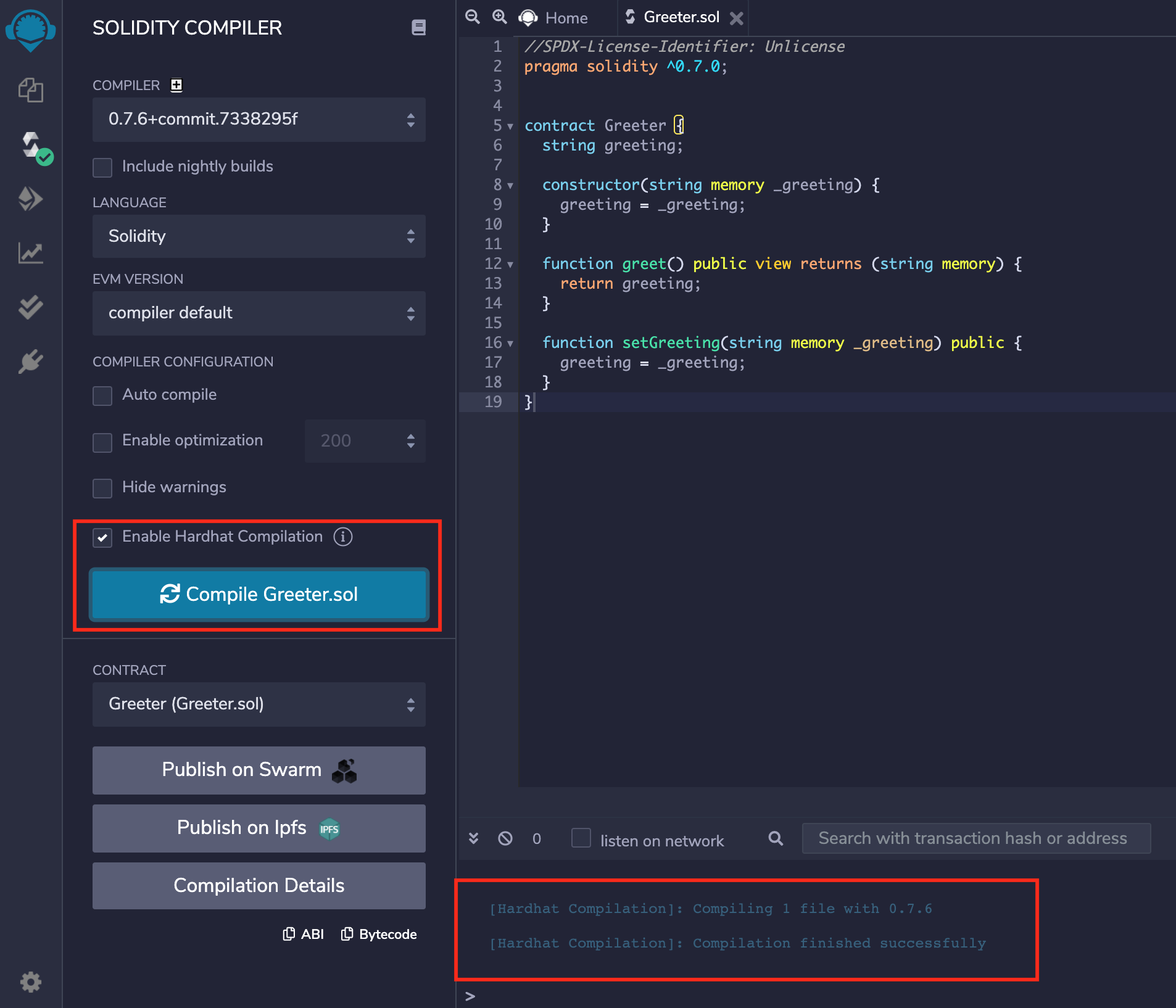
Check the Enable Hardhat Compilation box to run the compilation for Hardhat along with Remix using the compiler configuration in the Solidity Compiler plugin.
On clicking the Compile button, a remix-compiler.config.js file will be created in the project root which stores the compiler configuration set in Remix’s Solidity Compiler plugin. It is passed to Hardhat for compilation.
The result of the compilation will be shown in the Remix IDE terminal.
Hardhat provider
Note
In Hardhat, contracts are deployed by starting a local node. Read more about it in the Hardhat documentation.
Hardhat Provider enables deployment to the Hardhat localhost network. This can be chosen in the ENVIRONMENT dropdown of the Deploy and Run plugin.
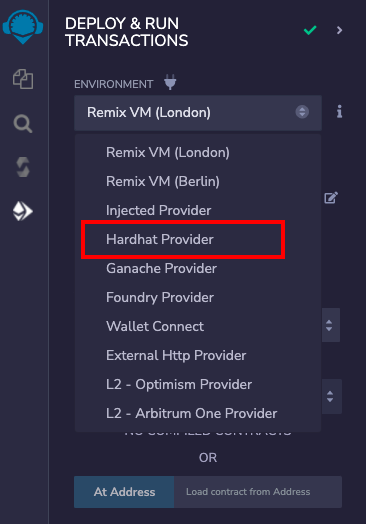
Dès que vous sélectionnez Hardhat Provider, une fenêtre modale s’ouvre pour vous demander le Hardhat JSON-RPC Endpoint.
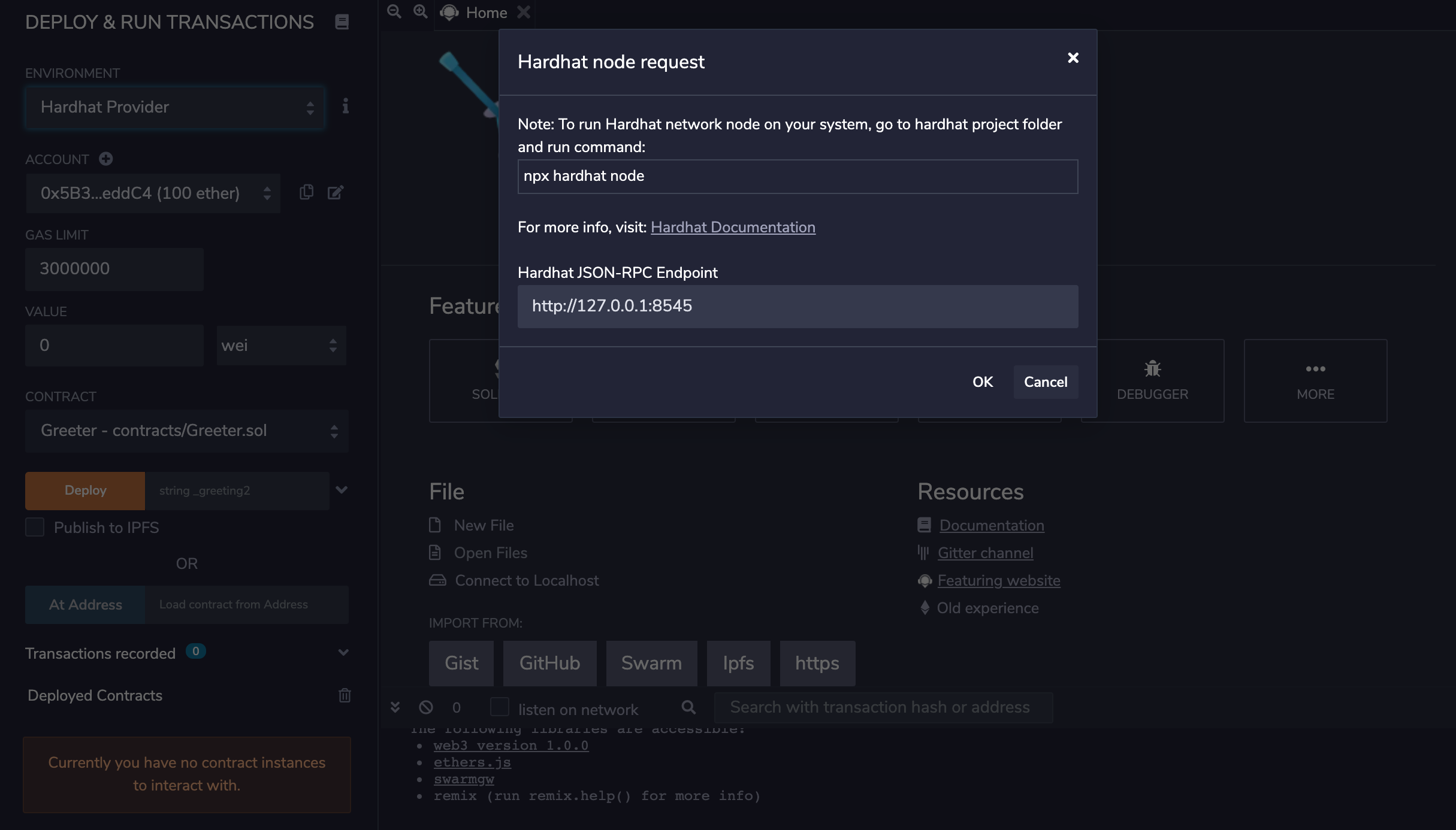
If the Hardhat node is running with default options, the default endpoint value in the modal will not need any change. If the Hardhat node host and port are different, the JSON-RPC endpoint should be updated in the modal text box.
Once the correct endpoint is filled in the modal, click OK and the accounts from the Hardhat node will be loaded in the ACCOUNT section. The network id will also be shown.
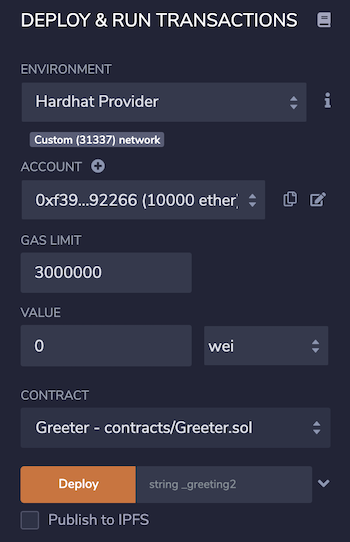
Now, you can start deploying the contract from Remix IDE to the Hardhat local node as usual.
Using console.log in Remix IDE
Remix IDE supports the Hardhat console library while using Remix VM. It can be used while making a transaction or running unit tests.
Using console.log
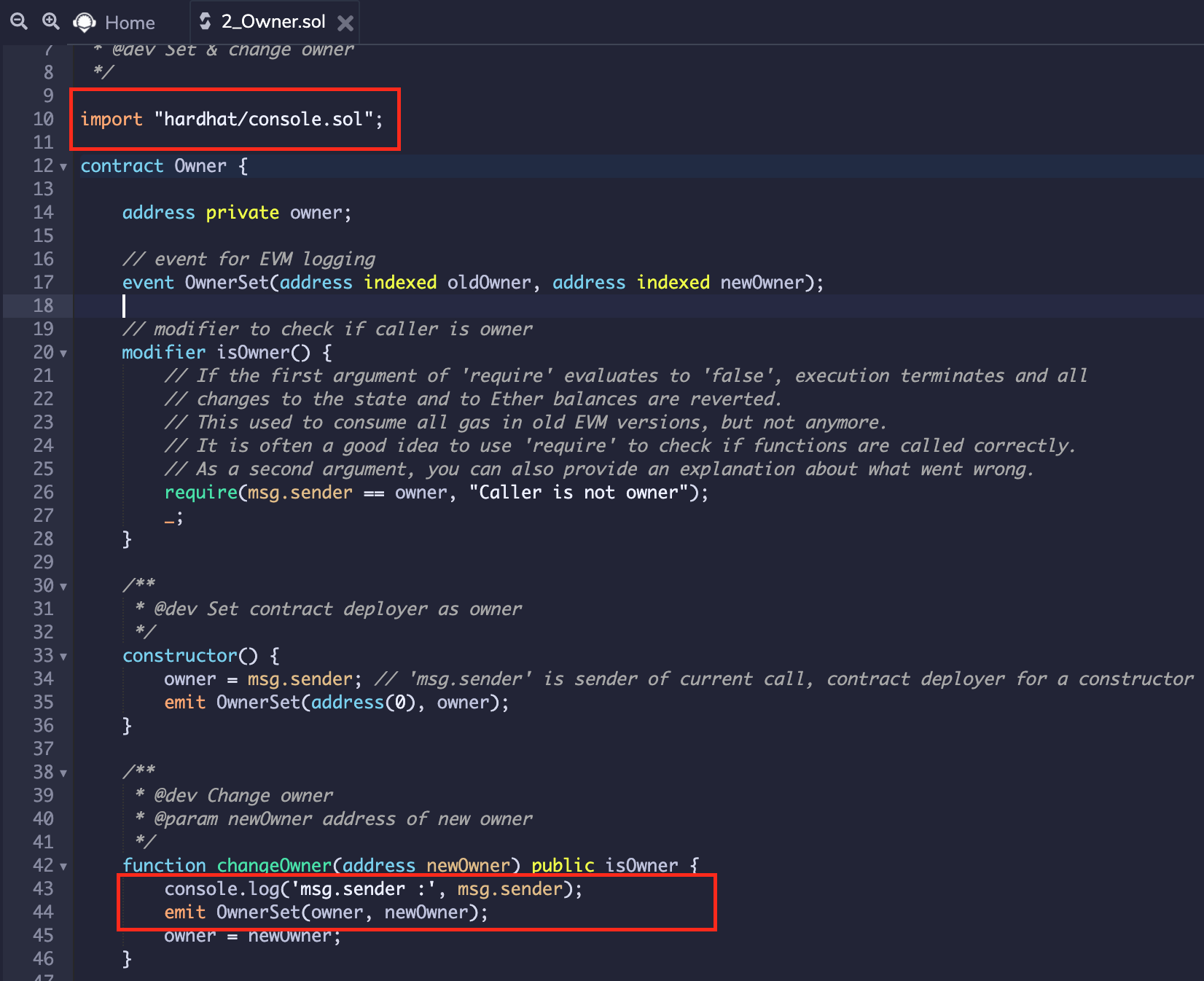
To try it out, you need to put an import statement and use console.log to print the value as shown in the image.
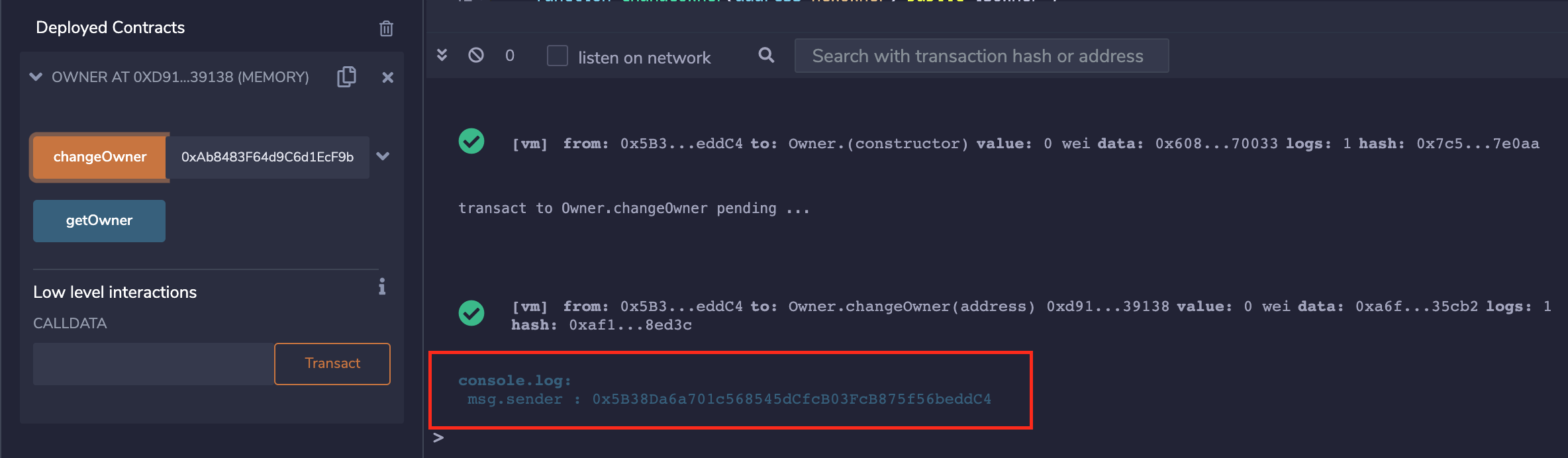
Further, once you execute the changeOwner method, the value from the console statement will be shown in the Remix terminal after the transaction details:
Tests unitaires de Solidity
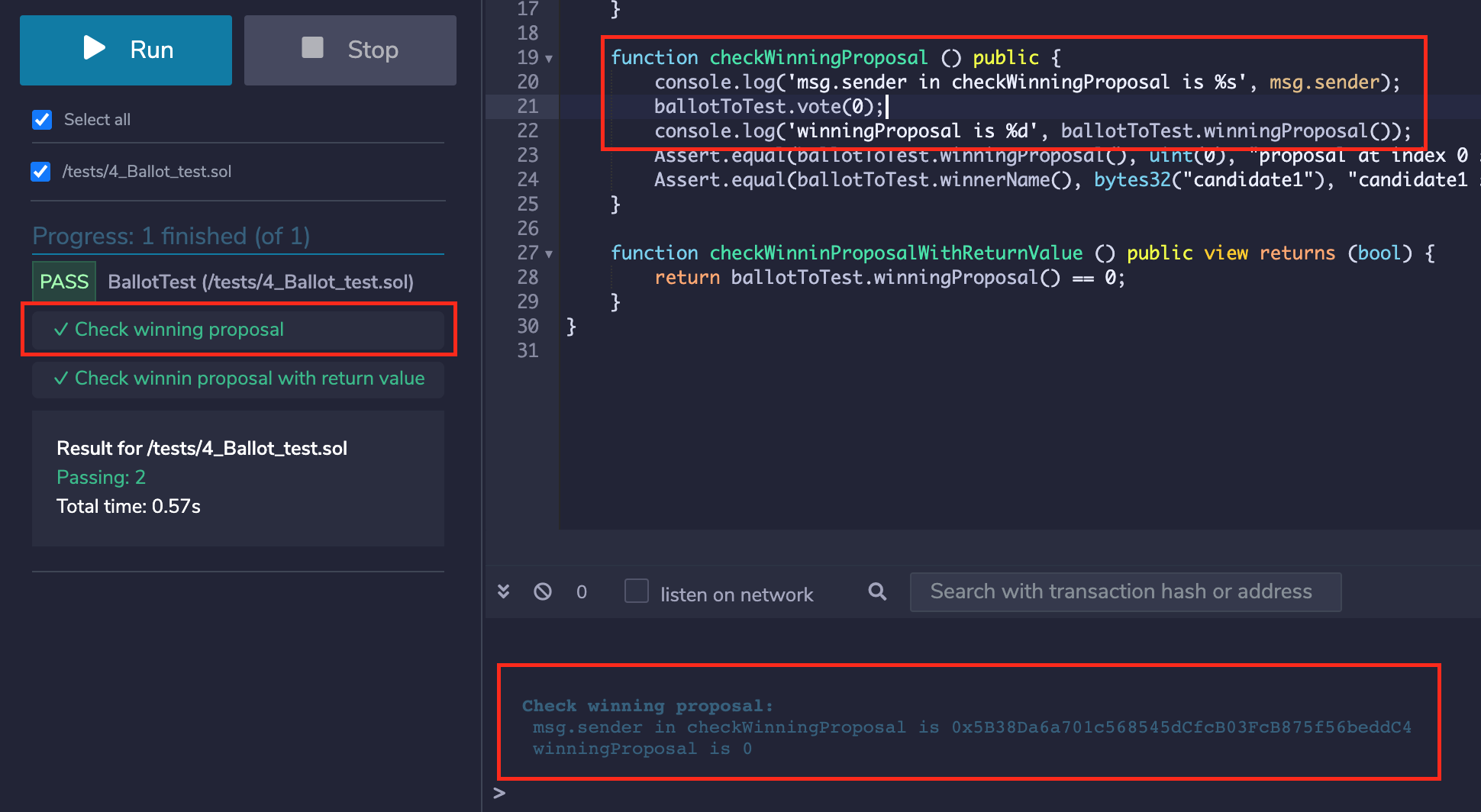
Similarly, console.log can be used while running unit tests using the Remix Solidity Unit Testing plugin.
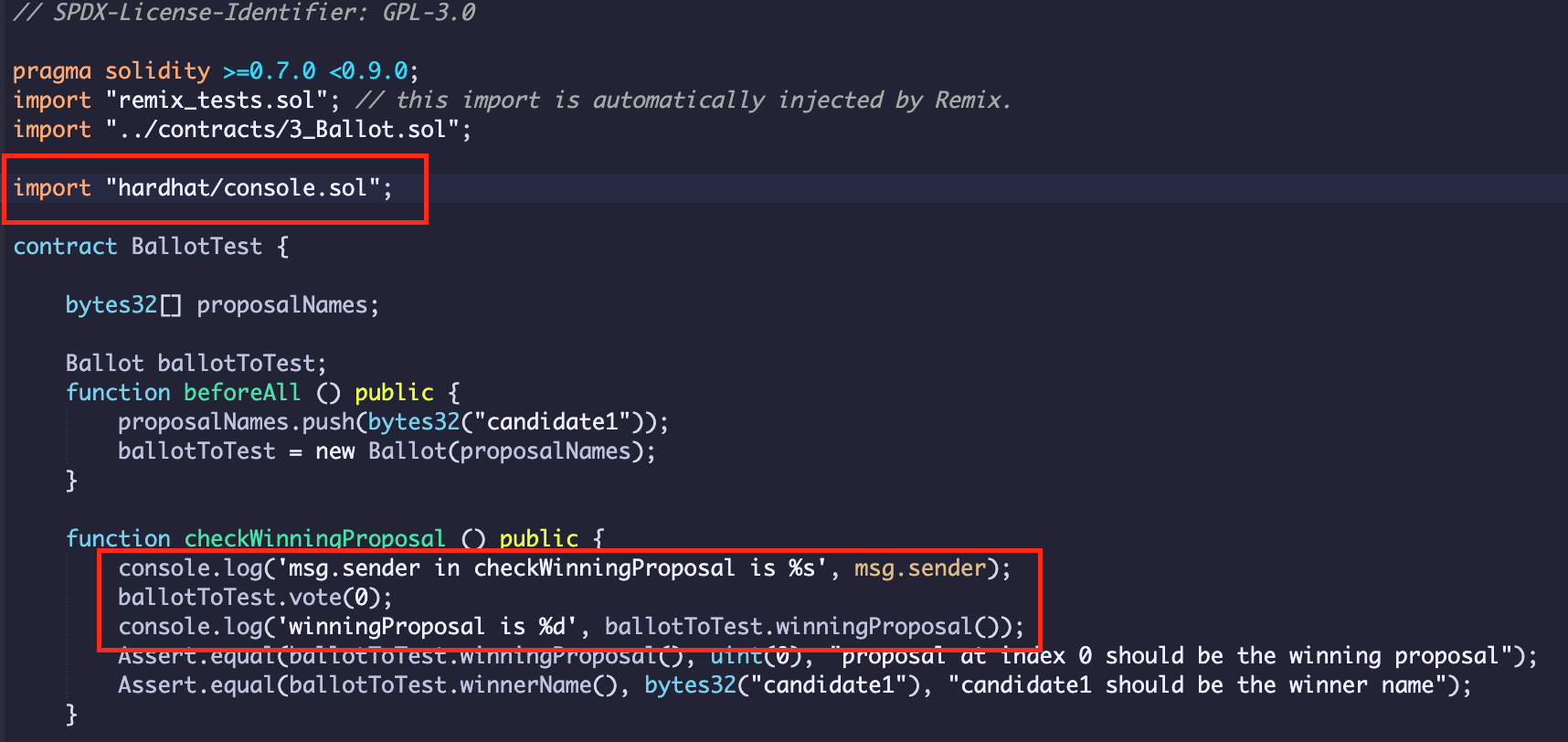
For tests that include a logging message, the output will display in the Remix Terminal corresponding to the test name.